Why Medical Students Need Better Tools for Learning Human Anatomy

Human anatomy is one of the first subjects medical students study, but it is also one of the most challenging. It is not enough to simply remember the names of bones, muscles, organs, nerves, and blood vessels. Students also need to understand where these structures are located, how they connect, and how they work together inside the body. This is where many traditional learning methods start to feel limited. Textbooks, diagrams, lectures, and lab sessions are useful, but they do not always make anatomy easy to visualize. The human body has depth, layers, movement, and complex relationships between systems. A flat image can explain one view, but students often need anatomy education with MedTableAR to truly understand what they are studying.

The Limits of Traditional Anatomy Study

Traditional study methods still matter. Textbooks provide detailed explanations. Lectures help organize information. Lab sessions give students a closer look at anatomical structures. But these methods work best when supported by tools that make learning more interactive.

A textbook may show the heart from one angle, but a student needs to understand its chambers, valves, vessels, and blood flow from multiple perspectives. A chart may label the nervous system, but it may not show how nerves travel through the body in a way that feels easy to grasp.

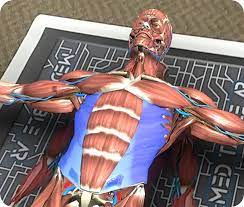
This is why anatomy education with MedTableAR can be useful for modern learners. Instead of relying only on flat images, students can explore 3D anatomy models through augmented reality. This gives them a clearer way to study body systems and understand how different structures relate to each other.

Moving Beyond Memorization

One of the biggest problems in anatomy learning is that students may memorize terms without fully understanding them. They may know the name of a muscle or organ, but still struggle to explain where it is, what surrounds it, or how it works with the rest of the body.

Good anatomy education should help students connect names with meaning. It should help them understand structure, function, and relationships together. This is where anatomy learning with MedTableAR can add value, because it gives students a more visual way to study anatomy instead of depending only on memory.

When students understand anatomy more clearly, it also helps them in other medical subjects. Physiology, pathology, imaging, surgery, and clinical care all become easier to connect when the foundation of anatomy is strong.

The Role of Technology in Medical Education

Technology should not replace textbooks, teachers, or lab-based learning. Instead, it should make those resources more effective. The right digital tool can help students review lessons, understand difficult topics, and study at their own pace.

Augmented reality is especially useful because it allows students to see anatomy in a more realistic and interactive way. It can bridge the gap between classroom theory and visual understanding. This makes anatomy education using MedTableAR a practical option for schools, colleges, and training programs that want to make learning more engaging and clear.

Conclusion

Medical students need better tools because anatomy is not just about memorizing body parts. It is about understanding how the human body is built and how every structure connects with another. Traditional methods are still important, but they are not always enough to give students a complete visual understanding. MedTableAR supports modern anatomy education by making learning more interactive, visual, and practical. It helps students explore the body in 3D, understand difficult structures more clearly, and stay more engaged with the subject.

FAQs

1. Why is human anatomy difficult for medical students to learn?

Human anatomy is difficult because students must understand names, locations, layers, functions, and how body structures connect in 3D.

2. How can better tools improve anatomy learning?

Better tools can make anatomy more visual, interactive, and easier to understand beyond flat textbook diagrams.

3. What is the role of augmented reality in anatomy education?

Augmented reality helps students explore body systems and organs in a more realistic 3D format, making complex topics easier to study.

4. How does MedTableAR support anatomy education?

MedTableAR supports anatomy learning through interactive 3D models, body system views, organ modules, quizzes, and visual demonstrations.

5. Can MedTableAR replace textbooks and lectures?

No. MedTableAR is designed to support textbooks, lectures, and classroom teaching by making anatomy more visual and engaging.

How Does MedTableAR Bring Human Body Systems To Life In Every Classroom?

Teaching anatomy has always required educators to simplify one of the most complex subjects in science. Traditional textbooks, plastic models, and diagrams provide valuable information, but they often struggle to capture the dynamic nature of the human body. Students learn more effectively when they can visualize structures, interact with systems, and explore anatomy from multiple perspectives. That is why innovative educational technology is reshaping classrooms worldwide. With MedTableAR, educators can create immersive learning experiences that make anatomy easier to understand, more engaging to explore, and far more memorable for students of all learning styles.

Today’s classrooms demand tools that encourage participation rather than passive observation. Interactive technology allows students to connect concepts with real-world visualization, helping them build stronger knowledge and greaters confidence as they study the human body.

Why Interactive Anatomy Education Makes A Contrast 

Students often remember what they experience better than what they simply read. Interactive learning transforms anatomy into an engaging journey in which learners actively participate rather than memorizing isolated facts.

Using augmented reality, complex body systems become easier to understand because students can rotate, zoom, and examine organs from multiple angles. They gain a clearer understanding of how muscles, bones, blood vessels, and organs work together rather than viewing them as separate topics.

At MedTableAR, we help educators create exciting learning environments where curiosity naturally drives deeper understanding through interactive exploration.

How MedTableAR Creates An Immersive Learning Experience

Modern anatomy education benefits tremendously from three-dimensional visualization. Instead of relying solely on static illustrations, students can interact with detailed anatomical models that respond in real time.

Our platform enables learners to explore major body systems, examine anatomical planes, investigate posterior views, and observe biological processes such as blood circulation. Interactive controls allow students to rotate, zoom, and virtually dissect structures while built-in quizzes reinforce concepts immediately after exploration.

This combination of visualization and participation transforms difficult anatomy lessons into engaging educational experiences that improve both comprehension and long-term retention.

Designed For Today’s Modern Classrooms

Educational technology should simplify teaching rather than complicate it. Our complete classroom solution is designed for easy implementation across middle schools, high schools, technical colleges, and healthcare education programs.

The package includes a durable body map learning mat, Samsung tablets preloaded with the application, a screencasting device for classroom displays, and a convenient storage system. Teachers can begin using the platform quickly without requiring complicated installations or specialized technical expertise.

Ready To Transform Anatomy Education?

Bring interactive anatomy into your classroom with innovative augmented reality technology that increases engagement, supports visual learning, and helps students develop lasting confidence in human anatomy. Reach out to us today to request a personalized quote and learn how our solution can fit seamlessly into your curriculum.

Supporting Every Type Of Learner

Every classroom contains students with different learning styles. Some learn best by reading, while others retain information through observation or hands-on activities. Interactive augmented reality bridges these learning preferences by combining visual, tactile, and experiential learning into one educational platform.

Students become active participants as they investigate body systems independently, discuss findings collaboratively, and immediately apply their knowledge through integrated assessments. This inclusive approach helps educators reach more students while making anatomy lessons more enjoyable and productive.

A Cost-Effective Investment In Educational Success

Traditional anatomical models require storage space, maintenance, and periodic replacement. Augmented reality provides a flexible alternative that offers significantly more educational value while reducing dependency on multiple physical teaching materials.

Schools benefit from continuously available digital content, engaging classroom demonstrations, and versatile instructional resources that can be incorporated into a range of science and healthcare courses. This makes anatomy education more accessible while maximizing educational budgets.

Conclusion

The future of anatomy education is interactive, immersive, and student-centered. By combining advanced augmented reality with detailed anatomical visualization, MedTableAR helps students explore the human body in ways traditional resources cannot. From interactive 3D models to real-time physiological processes and integrated assessments, our solution empowers educators to deliver engaging lessons that improve understanding and knowledge retention.

If you’re ready to transform anatomy education with innovative classroom technology, contact us today and discover how our interactive learning solution can inspire your students and elevate every lesson.

FAQs

1. What age groups can use MedTableAR?

Our platform is designed for middle schools, high schools, technical colleges, healthcare training programs, and other educational institutions teaching anatomy.

2. Does MedTableAR require advanced technical knowledge?

No. The system features an intuitive interface that lets both educators and students begin using it quickly with minimal training.

3. What is included with the MedTableAR package?

The package includes a one-year application license, three pre-programmed Samsung tablets, a durable printed body map mat, a screencast device for classroom displays, a roll-up storage case, and a one-year product warranty.

Advanced Anatomy Education with Augmented Reality for High School Classrooms

We are redefining how anatomy is taught by bringing the human body to life through immersive technology. Our approach introduces a dynamic shift from passive learning to interactive exploration, enabling students to engage deeply with complex biological systems. By integrating MedTable AR into high school curricula, educators can create a learning environment that is both collaborative and concept-driven.

Transforming Classroom Learning with AR Integration

Augmented reality enhances anatomy education by allowing students to visualize and interact with 3D anatomical structures in real time. This framework supports experiential learning, encouraging students to explore, discuss, and analyze how body systems function together.

Core Learning Outcomes

Students will:

● Work collaboratively in structured pairs to explore anatomical systems

● Communicate findings effectively within groups

● Demonstrate understanding through notes and interactive tasks

● Analyze how systems interact to maintain overall health

Structured Lesson Framework

1. Lesson Objectives

Students are guided to:

● Identify and describe major human body systems

● Accurately locate anatomical structures using AR tools

● Strengthen teamwork and communication skills

● Apply knowledge through guided exploration

2. Essential Questions

● What are the major human body systems and their functions

● How do these systems interact to sustain life

● How does collaboration enhance understanding

3. Standards Alignment

● HS LS1 2 focuses on modeling system functions

● HS LS1 3 emphasizes analysis of interacting systems

Instructional Flow

  • Introduction Phase

Students review key systems, receive an overview of AR tools, and understand collaboration expectations.

  • Exploration Phase

Students interact with AR models, document findings, complete structured tasks, and engage in peer discussions.

  • Reflection Phase

Students share insights, evaluate teamwork, and clarify misconceptions.

  • Closure Phase

Key concepts are reinforced and connected to real-world applications.

System-Based Learning Modules

Each system is taught using a consistent structure for clarity.

  • Cardiovascular System

Students explore heart function, circulation pathways, and the roles of blood, connecting these to oxygen and nutrient transport.

  • Digestive System

The focus is on food breakdown, organ roles, and nutrient absorption, helping students understand energy production.

  • Nervous System

Students analyze brain function, neural communication, and system coordination to understand how the brain responds to stimuli.

  • Skeletal and Muscular Systems

These modules highlight structure, movement, and coordination, helping students connect support with mobility.

Assessment Strategy

Evaluation includes:

● Accuracy of guided notes

● Completion of AR-based activities

● Participation in discussions

● Collaboration effectiveness

Expected Outcomes

This framework leads to:

● Increased engagement in science learning

● Improved understanding of complex systems

● Stronger communication and collaboration

● Better retention through immersive experiences

Conclusion

We see augmented reality as a powerful tool that transforms anatomy education into an engaging and meaningful experience. Our approach equips educators to create classrooms where students actively explore, collaborate, and develop lasting scientific understanding.

Bring immersive anatomy learning into your classroom today. Empower students with interactive tools that make science meaningful.

FAQs

Q1. How does augmented reality improve anatomy learning in high school?

Augmented reality enables interactive 3D visualization of body systems, helping students understand complex structures more clearly while improving engagement and long-term knowledge retention.

Q2. Is MedTable AR easy for teachers to integrate into the existing curriculum?

Yes, it aligns with standard frameworks and includes structured lesson plans, making integration seamless without requiring major changes to existing teaching methods.

Q3. What benefits do students gain from AR-based anatomy lessons?

Students gain improved conceptual understanding, stronger collaboration skills, enhanced communication abilities, and better retention through hands-on, visually immersive learning experiences.

Using AR to Strengthen Conceptual Understanding in Middle School Biology

We are entering a new era of science education where learning is no longer confined to textbooks and static diagrams. Our classrooms are becoming interactive environments where students explore biology through immersive experiences. 

Augmented Reality is driving this change by making complex anatomical concepts visible, engaging, and easier to understand.

Curriculum Integration Plan

A structured approach to integrating AR into middle school biology ensures alignment with academic standards while enhancing engagement. This framework supports collaborative learning, clear communication, and stronger conceptual understanding.

  • Learning Focus

Students work in pairs to complete AR-based exploration tasks. They communicate findings, participate in discussions, and demonstrate understanding through guided activities. This approach strengthens both knowledge and teamwork.

  • Lesson Objectives

Students identify major body systems, locate anatomical structures using AR, and explain how systems function individually and together. Collaboration remains central to achieving these outcomes.

  • Essential Questions

Students explore key questions about body systems, their interactions, and how teamwork improves learning outcomes. These questions guide inquiry and deepen understanding.

  • Standards Alignment

The curriculum aligns with MS LS1 2 and HS LS1 2 standards, focusing on using models to describe human body systems and their functions.

  • Assessment Strategy

Assessment includes completing note guides, demonstrating accuracy in AR tasks, participating in discussions, and observing teamwork and communication.

Lesson Flow

  • Introduction

Students are introduced to body systems and trained on AR tools. Clear expectations for collaboration are established.

  • Exploration

Students navigate AR models in pairs, identify structures, and document findings. Interactive quizzes reinforce learning.

  • Reflection

Students share observations and challenges as they refine their understanding through discussion.

  • Wrap Up

Key concepts are reinforced, and connections between systems are emphasized to strengthen conceptual clarity.

System-Based Learning Modules

  • Cardiovascular System

Students explore the heart, arteries, and veins, understanding blood flow and oxygen transport through interactive visualization.

  • Digestive System

Learners examine digestion, nutrient absorption, and waste elimination, focusing on the organs and processes involved.

  • Integumentary System

Students study skin layers, protection, and temperature regulation using detailed AR models.

  • Lymphatic System

The focus is on immune defense, lymph nodes, and disease prevention.

  • Muscular System

Students learn about muscle types, coordination, and the importance of movement.

  • Nervous System

The module explains the structure of neurons, brain function, and reflex actions.

  • Respiratory System

Students explore air pathways and gas exchange to understand how oxygen supports body functions.

  • Skeletal System

Learners identify bones and joints and understand their roles in supporting and moving the body.

Educator Professional Development Plan

Educators begin by attending training sessions and exploring AR tools. Mid-year efforts focus on refining teaching strategies using student feedback. By the end of the year, educators evaluate outcomes and share insights to improve future implementation.

Final Takeaway

We understand that true learning happens when students actively engage with concepts. Our approach to AR integration transforms biology into an interactive experience that improves retention, encourages collaboration, and builds lasting scientific understanding.

Bring biology to life with immersive AR learning in your classroom. Help students explore, interact, and truly understand complex concepts.

FAQs

Q1. How does AR enhance biology learning?

AR allows students to visualize complex anatomical structures in 3D, making abstract concepts clearer and improving retention through interactive, hands-on exploration.

Q2. Can AR be effectively used in middle school classrooms?

Yes, AR simplifies complex topics, increases engagement, and encourages collaboration, making it highly suitable for middle school students learning foundational biology concepts.

Q3. What outcomes can educators expect from AR integration?

Educators can expect improved student engagement, better conceptual understanding, enhanced collaboration skills, and more effective assessment outcomes through interactive learning experiences.

Why MedTableAR? A Comparison of Learning Tools for Health Science Education

When it comes to teaching human anatomy and physiology, educators have many tools at their disposal. From traditional models and textbooks to online 3D anatomy platforms, each method has its strengths and limitations. But how does MedTableAR compare? Let’s take a closer look!

MedTableAR vs. Other Learning Tools

FeatureMedTableARTraditional ModelsOnline 3D AnatomyTextbooks
Interactive AR Learning✅ Yes❌ No✅ Limited❌ No
Hands-On Engagement✅ Yes✅ Yes❌ No❌ No
Portability✅ Compact & Easy Storage❌ Bulky✅ Yes✅ Yes
Multi-User Capability✅ Up to 6 Students❌ No✅ Yes❌ No
Built-In Quizzes✅ Yes❌ No✅ Some❌ No
Realistic Human Body Systems✅ High Detail✅ Physical Model✅ Digital❌ Illustrations Only
Scalability & Dissectible Models✅ Yes✅ Limited✅ Limited❌ No
Cost-Effective for Schools✅ One-time purchase + low renewal❌ Expensive per model✅ Subscription-Based✅ Affordable
Works on Smartboards✅ Yes (Screen Cast)❌ No✅ Some❌ No
Future Updates & Enhancements✅ Regular Updates❌ No✅ Limited❌ No

Why Educators Love MedTableAR

📌 Engaging & Interactive: MedTableAR brings anatomy to life with augmented reality, helping students see and explore the human body in ways that static models or textbooks simply can’t.

📌 Cost-Effective for Schools: Traditional anatomy models can be costly and fragile, while online tools often require ongoing subscriptions. MedTableAR offers a one-time purchase with an affordable annual renewal for updates.

📌 Built for Collaboration: With up to six students able to use one MedTableAR system at a time, learning becomes a shared experience.

📌 Perfect for HOSA & Health Science Programs: MedTableAR aligns with HOSA competitions and health science education standards, making it an excellent tool for future healthcare professionals.

Want to Learn More?

If you’re looking for an affordable, interactive, and engaging way to teach human anatomy, MedTableAR is the solution for you! Contact us at info@medtablear.com or visit medtablear.com to learn more.

Would you like to see MedTableAR in action? Check out our latest video here: Watch Now.

MedTableAR is Headed to Arkansas HOSA!

We’re excited to announce that MedTableAR will be exhibiting at the Arkansas HOSA State Leadership Conference in Hot Springs, AR, from February 23-25! 🚀

This is a fantastic opportunity for future health professionals to experience MedTableAR—an interactive augmented reality learning system that brings anatomy and physiology to life! With 3D body systems, dissectible organs, and built-in quizzes, students and educators can engage with A&P like never before.

🔹 Visit our exhibit to see MedTableAR in action
🔹 Learn how it can enhance your health science program
🔹 Ask questions and explore special HOSA pricing

Educators and students—stop by and experience the future of health science education! See you in Hot Springs!

📍 Learn more at: medtablear.com

MedTableAR is Coming to Alabama HOSA SLC!

🚨 Attention Alabama HOSA! 🚨

We’re excited to announce that MedTableAR will be exhibiting at the Alabama HOSA State Leadership Conference on Friday, February 28, in Montgomery, AL! 🎉

If you’re a health science educator or HOSA student, this is your chance to experience MedTableAR—an interactive, augmented reality learning system that transforms A&P education with 3D body systems, dissectible organs, and built-in quizzes.

🔹 See MedTableAR in action with a hands-on demo
🔹 Learn how it can enhance your health science program
🔹 Ask about special HOSA pricing

📍 Don’t miss this opportunity to explore the future of health science education! Stop by our exhibit and see why MedTableAR is a game-changer for future healthcare professionals!

🌐 Learn more at: medtablear.com

 MedTableAR is Headed to Georgia HOSA SLC!

🚀 Attention Georgia HOSA! 🚀

We’re excited to announce that MedTableAR will be exhibiting at the Georgia HOSA State Leadership Conference on Friday, March 7, in Atlanta, GA! 🎉

Future healthcare professionals need engaging, hands-on learning tools—and MedTableAR brings anatomy to life with augmented reality! Our system allows students to explore 3D body systems, dissectible organs, and interactive quizzes, making A&P education more immersive and effective than ever.

🔹 See MedTableAR in action with a live demo
🔹 Discover how it enhances health science education
🔹 Ask about exclusive HOSA pricing

📍 Don’t miss your chance to experience the future of healthcare education! Stop by our exhibit and see why MedTableAR is transforming the way students learn.

🌐 Learn more at: medtablear.com

MedTableAR is Heading to Colorado HOSA!

We’re kicking off our 2025 HOSA conference tour in Denver, CO, at the Colorado HOSA State Leadership Conference, February 18-20! 🚀

At MedTableAR, we’re passionate about helping HOSA students and health science educators bring learning to life with immersive augmented reality. Our interactive system allows students to explore body systems, major organs, and anatomical functions in a way that’s engaging, hands-on, and easy to use. Whether you’re preparing for HOSA competitive events or looking for an exciting addition to your classroom, MedTableAR is the perfect learning tool!

Stop by Our Booth!

If you’re attending Colorado HOSA, make sure to visit our exhibit to see MedTableAR in action! We’ll be showcasing live demonstrations, answering questions, and helping educators learn how MedTableAR can enhance their health science programs.

📍 Colorado HOSA State Leadership Conference
📅 February 18-20, 2025
📌 Denver, CO

Don’t miss this chance to explore the future of health science education! Want to learn more before the conference? Visit medtablear.com or email us at info@medtablear.com.

See you in Denver! 👋🔬 #ColoradoHOSA #MedTableAR #FutureHealthPros

MedTableAR is Hitting the Road: Catch Us at 15+ HOSA Conferences This Spring and Summer!

Exciting news! MedTableAR is making a big impact in 2025 by exhibiting at over 15 HOSA conferences across the country this spring and summer. We’re thrilled to meet HOSA advisors, health science educators, and students who are passionate about preparing the next generation of healthcare professionals.

Why MedTableAR is a Must-Have for HOSA Programs

HOSA programs are all about hands-on, immersive learning, and that’s exactly what MedTableAR delivers. Our augmented reality learning system helps students visualize human anatomy, explore body systems, and engage in interactive lessons—all in a way that’s dynamic, cost-effective, and easy to use in the classroom.

With built-in quizzes, dissectible 3D organ models, and the ability to collaborate in small groups, MedTableAR is the perfect study and competition tool for HOSA students preparing for medical and health science events.

Stop by Our Booth and Experience MedTableAR for Yourself

If you’re attending a HOSA conference this year, don’t miss your chance to see MedTableAR in action! Our team will be on-site showcasing how this innovative tool can enhance your curriculum, engage students, and prepare them for success in health science careers.

👉 Want to learn more before the conference? Visit medtablear.com or email us at info@medtablear.com.

We can’t wait to see you on the road and show you how MedTableAR is transforming health science education! 🚀